
7 Kitchen
From cracking an egg to feeding six: knife skills, food safety, planning a week of meals and cooking without a recipe.
Principle 7. Keep food safe, learn a few methods by heart, and plan before you shop.
All 17 Kitchen lessons
In Manual order 7.1 · KitchenHow to set a table
 7.2 · KitchenCracking an egg cleanly
 7.3 · KitchenFollowing a recipe and measuring accurately
 7.4 · KitchenUsing an oven safely
 7.5 · KitchenHow to tell if an egg is bad
 7.6 · KitchenBoiling an egg to the yolk you want
 7.7 · KitchenHow to cook rice on the stove
 7.8 · KitchenHow long is cooked chicken good for in the fridge
 7.9 · KitchenChopping an onion with the claw grip
 7.10 · KitchenStoring raw meat safely in the fridge
 7.11 · KitchenReading food date labels
 7.12 · KitchenHow to thaw chicken fast
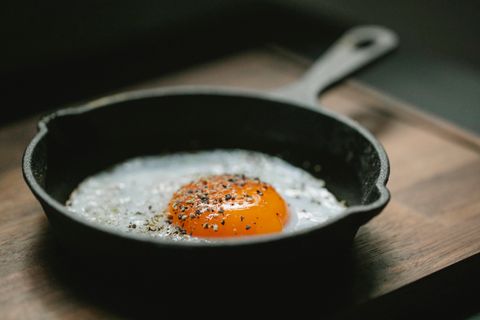 7.13 · KitchenHow to season cast iron
 7.14 · KitchenCooking chicken to a safe temperature
 7.15 · KitchenFive dinners you can cook from memory
 7.16 · KitchenPlanning a week of dinners with one shopping trip
 7.17 · KitchenCooking dinner for six, all ready at once
Kitchen topics
All topicsPrinciple 7 and its rules
Numbers are fixed, so you can cite them7. Keep food safe, learn a few methods by heart, and plan before you shop.
Cooking is the leading cause of home fires and home fire injuries in the US, and raw meat and poultry can carry germs such as Salmonella and Campylobacter. Colour is not a reliable sign that chicken is cooked; a food thermometer is. Planning saves food too: in the US, an estimated 30% to 40% of the food supply is wasted, much of it in stores and homes.
- 7.1Keep raw meat sealed on the bottom shelf of the fridge, and cook chicken pieces until a thermometer reads 165°F (74°C) in the thickest part. Health Canada advises 180°F (82°C) for a whole bird.
- 7.2Treat “best before” and “best if used by” dates as quality guides, but follow expiration dates and safe storage times.
- 7.3Handle heat and blades with care: set oven racks while the oven is cold, use dry mitts, and curl your fingertips under when you chop.
- 7.4Get the basics exact: crack eggs on a flat surface into a small bowl, time boiled eggs from when they go into boiling water, and level or weigh what you measure.
- 7.5Learn five flexible dinner patterns you can cook from memory.
- 7.6Plan the week around what you already have, and plan a big meal backwards from the moment you serve.
- 7.7Keep food by the safe rules: cold storage, safe thawing, leftovers within 3 to 4 days.
- 7.8Cook the staples well and look after your tools.


